How to Sell Nail Art Add-Ons Without Being Pushy
How to sell nail art add-ons without pressure: show examples during the consultation, use a simple add-on menu with clear prices, offer bundles and time the offer well.
Published 5 min read
In short
- Show, do not push. Clients say yes to nail art when they can see it, so show real examples or a preview during the consultation.
- Use a short add-on menu with clear prices, so the client decides without feeling sold to.
- Time the offer at booking or during the consultation, not halfway through the service, and accept a no with a smile.
- 1. The short answer
- 2. Step 1: Show examples during the consultation
- 3. Step 2: Build a simple add-on menu with clear prices
- 4. Step 3: Offer bundles instead of extras
- 5. Step 4: Let clients see the design before booking
- 6. Step 5: Time the offer well
- 7. Step 6: Remember what each client likes
- 8. Upselling versus adding value
The short answer
The easiest way to sell nail art add-ons is to make them visible and easy to say yes to. Show a few designs that fit the client, give a clear price for each option and ask once, at the right moment. Selling feels pushy when the client is surprised by the offer or the price. It feels helpful when she understands what she gets and can decide calmly.
Think of add-ons as a service you are explaining, not a target you are chasing.
Step 1: Show examples during the consultation
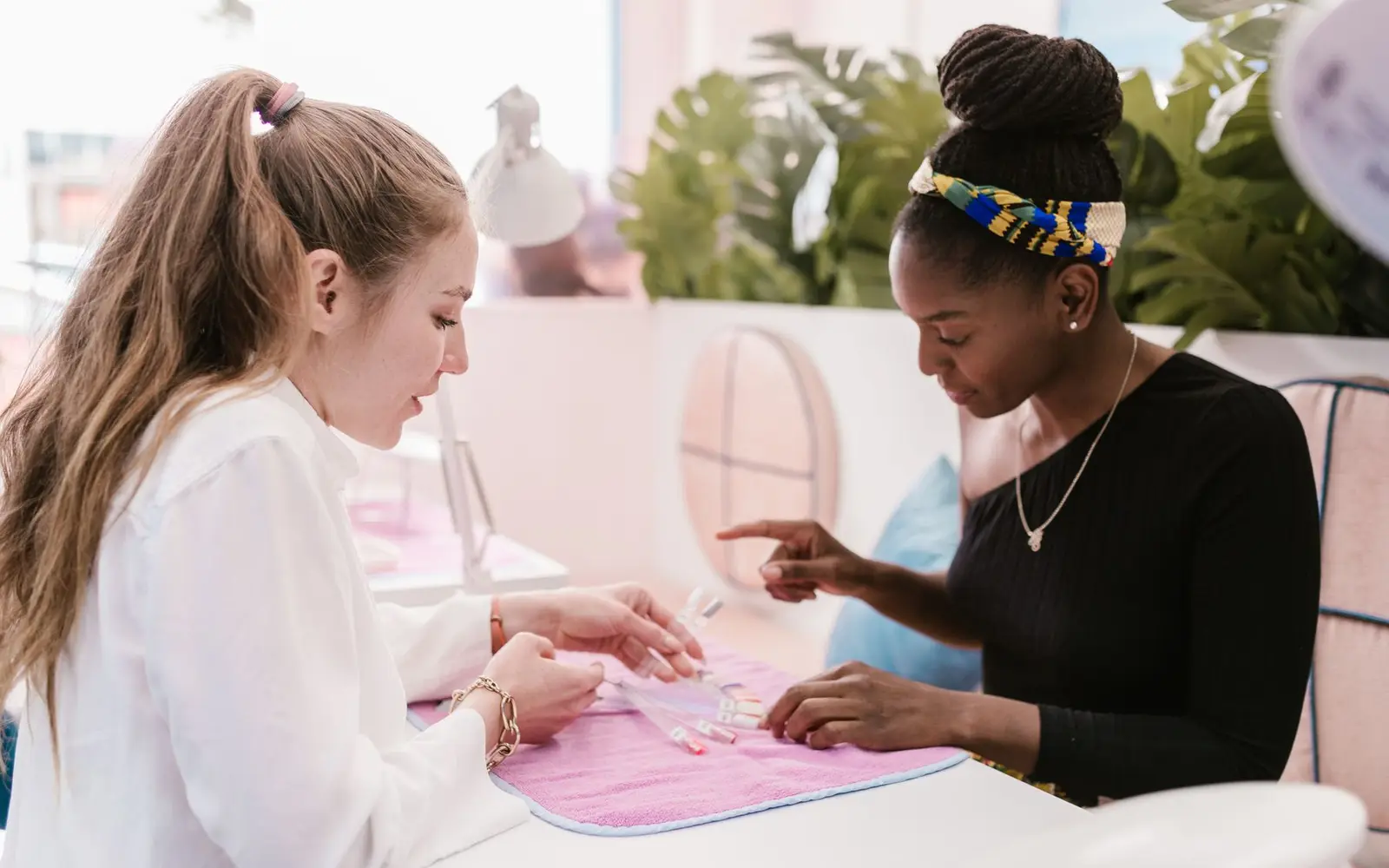
Most clients do not ask for nail art because they cannot picture it on their own hands. A short look at examples solves that.
- Keep a small gallery of your own work, sorted by style: minimal, French variations, chrome, florals, seasonal.
- Pick two or three options that match what the client already wears or likes, instead of scrolling through hundreds of photos.
- Ask open questions such as "Do you want something simple today, or a little detail on one or two nails?"
A good client consultation already covers style and preferences, so nail art becomes a natural part of the conversation.
Step 2: Build a simple add-on menu with clear prices
Unclear prices are the main reason an offer feels like pressure. A client who does not know the cost will often say no just to be safe.
- 1Group your nail art into a few levels, for example accent nails, simple design on all nails and detailed hand-painted art.
- 2Give each level a fixed price or a clear "from" price.
- 3Show the menu where the client books and at your station, so the price is never a surprise.
- 4Keep it short. Five to eight add-ons are easier to choose from than a long list.
If you are not sure what to charge, the guide on how to price nail services explains how to include your time, materials and skill level.
Step 3: Offer bundles instead of extras
A bundle turns several small decisions into one. Instead of asking about chrome, then gems, then a design, offer a ready combination such as "gel manicure with two accent nails" at one price.
Bundles work well for regular clients and for seasons with clear themes. Keep the base service available on its own, so the bundle is an option and not a requirement.
Step 4: Let clients see the design before booking
Clients hesitate to pay for a design they have never seen. A preview reduces that doubt. With the AI nail art feature in CutieCure Salon, you can create design ideas and show the client how a look could turn out before she books or before you start.
Previews also help you agree on details early, such as colors, length and which nails get the design. That means fewer changes during the appointment and a more accurate time estimate.
Step 5: Time the offer well
When you ask matters as much as what you offer. The best moments are:
- At booking: list add-ons on your booking link, so the client can add them and the right time is reserved.
- During the consultation: before you start, when the client is already thinking about the result.
- At checkout, for the next visit: "Next time, would you like to try the chrome finish?" plants an idea without pressure.
Avoid offering add-ons in the middle of the service when there is no time for them. It creates pressure for the client and delays your next booking.
Step 6: Remember what each client likes
Note the designs a client chose, liked or turned down in her client record. Next time, you can suggest something close to what she enjoyed and skip what she said no to. Personal suggestions feel like service. Repeating the same offer every visit feels like selling.
Upselling versus adding value
The difference is simple. Upselling focuses on what you earn. Adding value focuses on what the client gets. If an add-on does not suit her nails, her budget or her plans for the week, say so. Clients trust a technician who sometimes recommends less, and that trust is what makes them say yes later.
Accept a no without comment and do the base service with full care. A relaxed client is far more likely to try nail art next time than one who felt pushed.
Frequently asked questions
How do I offer nail art without sounding pushy?
Show two or three examples that suit the client, give a clear price and ask once. If she says no, move on and do the base service with full care.
When is the best time to suggest a nail art add-on?
At booking or during the consultation, before the service starts. Offering it in the middle of the appointment usually feels rushed.
Should nail art prices be on my menu?
Yes. Clear prices or "from" prices remove the surprise, which is the main reason an offer feels like pressure.
Are bundles better than individual add-ons?
They are often easier for clients because they make one decision instead of several. Keep the base service available on its own as well.
How can clients see a design before they book?
Show photos of your own work or create a preview. CutieCure Salon includes an AI nail art feature you can use to show design ideas before the appointment.
Put this into practice with CutieCure Salon
Online booking link, website widget, packages, customer groups, campaign codes and team performance in one dashboard, plus AI try-on for your clients.