Nail Client Consultation Form: What to Ask and What to Record
A nail client consultation form you can copy: the health, nail history and lifestyle questions to ask before each service, and where to record answers.
Published 9 min read
In short
- A good nail client consultation form covers five things before the first file stroke: health, nail history, lifestyle, expectations and the design.
- Record answers where the next technician will look: lasting facts in the client notes, one-visit details in the appointment notes, signed forms and detailed health information outside the dashboard.
- Everyone on your team with dashboard access can read client notes, so write short working notes ("acrylate allergy, no gel or acrylic"), never a medical history.
- 1. Why a consultation protects both the client and your salon
- 2. Health questions: allergies, sensitivities and when not to proceed
- 3. Nail history: previous enhancements, lifting, damage and habits
- 4. Lifestyle and expectations: length, shape, maintenance cycle and budget
- 5. Decide design and color before the first coat
- 6. What to record and where: client notes vs appointment notes
- 7. Health data and privacy: keep it minimal, get consent, remember who reads it
- 8. Read the history before the next visit
- 9. The copy-ready nail client consultation form
- 10. Train the team to run it in five minutes
Why a consultation protects both the client and your salon
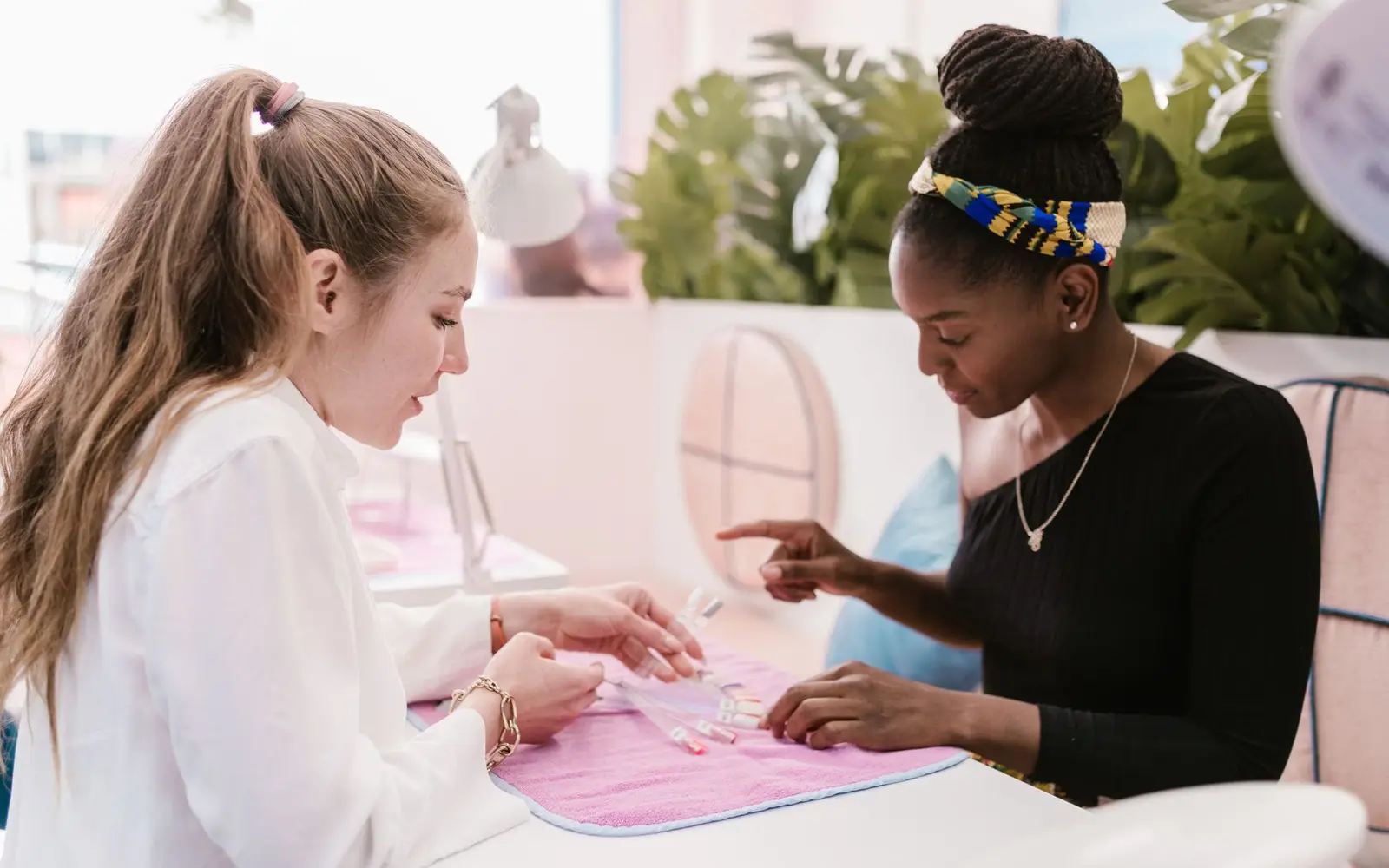
A consultation is the five minutes where you find out whether the service she asked for is the one she should get. It catches an allergy before a reaction, lifting before a complaint, and a "natural pink" misunderstanding before ninety minutes of work.
- For the client: less risk of a reaction, and a result that suits her hands and routine.
- For the technician: a clear brief and realistic timing.
- For the salon: a record of what was agreed, which makes redo requests easier to handle fairly.
A client whose answers are remembered next time also feels looked after, which is the heart of nail salon client retention.
Health questions: allergies, sensitivities and when not to proceed
Ask every new client, and ask regulars again whenever something has changed:
- Past reactions: itching, redness or swelling after gel, acrylic or polish. Reactions to nail products can appear on the fingertips, around the nail or even on the face and eyelids, so ask broadly.
- Hands today: cuts, cracks, eczema flare-ups or sore spots.
- Anything that changes how you work: for example diabetes or circulation problems (be extra gentle with cuticles), or medication that makes bleeding more likely. She decides what to share.
When not to proceed
Postpone the service, or skip the affected nail, and suggest a doctor or dermatologist if you see:
- Redness, swelling, warmth or pus around a nail.
- A nail lifting from the bed, thickened or discolored, especially under an old enhancement.
- Open wounds or broken skin where you would work.
- A reported reaction to the product family you were about to use.
Describe what you see instead of naming a condition: "This nail looks irritated, I would rather you had it checked before we cover it."
Nail history: previous enhancements, lifting, damage and habits
These answers decide your prep, your product and your timing:
- What is on the nails now: gel polish, builder gel, acrylic or press-ons. Removing another salon's work takes longer, so book the extra time.
- How long the last set lasted, and where it failed. Lifting near the cuticle often points to prep, breaks at the free edge to length or shape.
- Removal damage: thin, bendy or peeling nails usually call for a shorter length or a break with care treatments.
- Habits: biting, picking, using nails as tools, frequent hand washing.
Write down only what will still matter next month, such as "lifts at the sides after 2 weeks" or "bites when stressed, keep short".
Lifestyle and expectations: length, shape, maintenance cycle and budget
Most complaints are expectation gaps, not technical failures. Agree on these before you start:
- Work and hobbies: a nurse, a baker and a climber need different lengths, and some workplaces have rules about enhancements.
- Length and shape: show a tip or a photo so "short almond" means the same thing to both of you.
- Maintenance: can she come back every 2 to 3 weeks for a refill, or does she need something that grows out gracefully?
- Price and time: say both before you begin, including removal and nail art.
- Upcoming events: a wedding or a holiday changes the plan, and the date belongs in the notes for that booking.
Decide design and color before the first coat
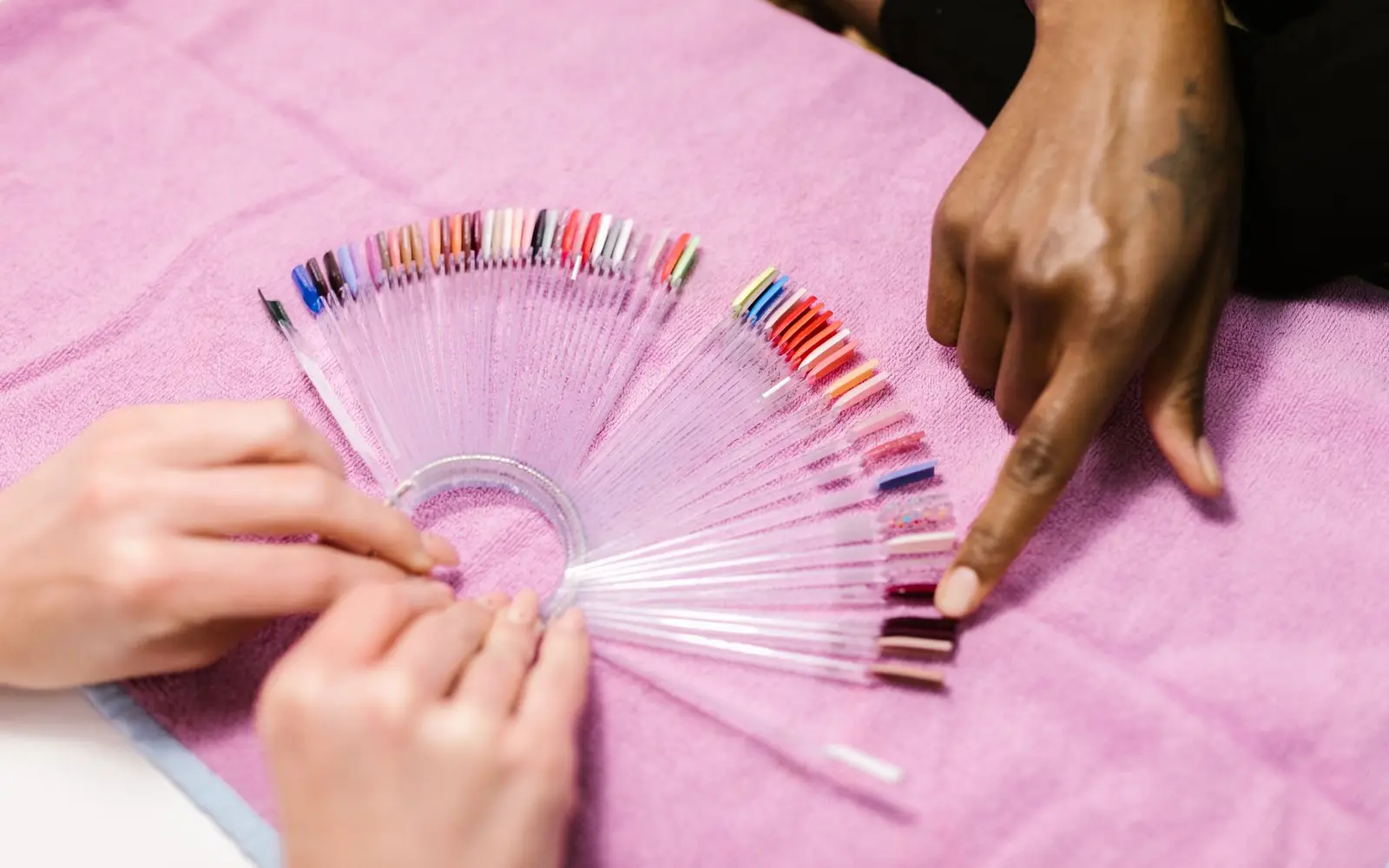
Changing the design halfway costs time and disappoints both of you. Before the first coat, agree which part of her reference photo she actually wants (the color, the finish, the art or the shape), confirm the finish and any accent nails, and paint one test nail to check in daylight.
If your shades are in your salon catalog, clients who connect to your salon in the CutieCure Book app by scanning your Customer QR can browse them, save favorites and try a shade on a photo of their own hand before the visit. The setup is in digital nail polish color chart.
Afterwards, write the exact shade name and number in her client notes. "Same as last time" only works if someone recorded what last time was.
What to record and where: client notes vs appointment notes
Notes only help if the next technician can find them. In CutieCure Salon, use two places in the dashboard and keep a third outside it.
Client notes: facts that last
Client notes sit on the customer profile and take several lines. Write one fact per line, for things that stay true from visit to visit:
- "Acrylate allergy confirmed by her dermatologist. No gel, no acrylic."
- "Short almond. Nudes and soft pinks. Last shade: name and number."
- "Thin nails after acrylic removal. Builder gel, refill every 3 weeks."
- "Sensitive cuticles, no nippers."
Appointment notes: this visit only
When you create a booking in the calendar, its notes field holds what matters for that visit: "removing another salon's acrylic, allow extra time" or "wedding on Saturday". These notes show in the appointment detail in the calendar, not on the customer profile, so anything that should outlive the visit goes in the client notes.
Outside the dashboard: signed forms and health details
Signed consultation or consent forms, and any health detail beyond what the team needs to act on, belong in your own paper file or secure storage, kept the way your local rules require.
Health data and privacy: keep it minimal, get consent, remember who reads it
Under GDPR in the EU and the UK, health details are a special category of personal data with stricter rules, and many other countries protect them too. Rules differ, so check what applies to your salon (this is not legal advice). These habits keep you on the safe side almost anywhere:
- Ask only what changes the service. You need to know about a gel reaction, not her medical history.
- Explain why you ask and get her consent before you write health information down.
- Remember who reads the notes. In CutieCure Salon, everyone on your team with dashboard access can see and edit client notes, so write only what the whole team needs to act on.
- Keep signed forms out of the notes, store them securely, and update or delete a note when the client asks or when it is no longer true.
Some clients arrive having run the AI nail care check in CutieCure Book or on your website widget, which gives a score and daily care tips. Treat it as a conversation starter, not a diagnosis. The salon only sees how many checks were used, not the results, so if she wants to share, ask her what it said.
Read the history before the next visit
Notes are only useful if someone reads them before the client sits down. Search for the client by name, phone or email on the Customers page and open her profile. It shows:
- Last visit, total appointments and total spent.
- Her client notes.
- Upcoming appointments and her last five past appointments, with service and status.
Two minutes at the start of the day is enough: open the profiles of today's clients and brief each technician. If the last visit was months ago, ask the health questions again, since medication, pregnancy or skin conditions may have changed. For the notes of an earlier visit, open that appointment in the calendar.
This matters most in a team, where a client may not see the same technician twice. See running a multi-staff nail salon.
The copy-ready nail client consultation form
Copy this list into a printed form or your own template.
Health
- Have you ever reacted to a nail product (itching, redness, swelling, blisters)? After which service?
- Any cuts, cracks, skin conditions or sore spots on your hands today?
- Anything we should know that affects the service, such as diabetes, circulation problems or medication that affects bleeding? (Share only what you want to.)
Nail history
- What is on your nails now, and when was it done?
- How long did your last set last? Where did it lift or break?
- Do you bite, pick or peel your nails?
Lifestyle and expectations
- What do you do with your hands at work and in your free time?
- What length and shape would you like? (Show a photo or a tip.)
- How often can you come back for maintenance?
- Any event coming up?
Design and sign-off
- Reference photo, color, finish and art placement agreed.
- Price and duration confirmed.
- Consent to record the health information above, with the client's signature and date (on the paper form).
Train the team to run it in five minutes
- 1Look at the hands before the design talk. Many answers are visible.
- 2Ask the three health questions in the same words every time.
- 3Ask about history and habits, then length, shape and maintenance.
- 4Close the design: reference, finish, one test nail, price and time.
- 5Before the client leaves, add anything that matters for next time to her client notes.
Role-play it once in a team meeting and agree on a note format, so everyone writes "no gel" the same way. You can start a free trial to try client notes and the calendar with your own clients, or see the calendar and customer list with sample data in the demo.
Frequently asked questions
Do regulars need a full consultation every time?
No. Run the full consultation for new clients and whenever a client switches systems, for example from gel polish to acrylic. For regulars, a quick check is enough: any new reaction, health change or change in what she wants.
Can I store signed consultation forms in CutieCure Salon?
No. There is no form builder and no way to collect signed consent. Keep signed forms in your own paper file or secure storage, and use the client notes for the short working notes your team needs.
Should a nail technician tell a client she has a nail infection?
No. Describe what you see, avoid naming a condition and suggest a doctor or dermatologist. The AI nail care check in CutieCure Book is guidance, not a diagnosis.
Who can see client notes in CutieCure Salon?
Everyone on your team who has dashboard access. Keep notes short and limited to what the team needs to act on.
Put this into practice with CutieCure Salon
Online booking link, website widget, packages, customer groups, campaign codes and team performance in one dashboard, plus AI try-on for your clients.