Nail Salon Inventory: How to Track Gel, Polish and Supplies
A simple nail salon inventory system: group your stock, set reorder points, count in 15 minutes a week and work out product cost per service.
By the CutieCure Salon teamPublished 6 min read
In short
- Split stock into consumables (gel, base and top coats, acetone, files, tips, wipes, gloves), colours and retail, and track consumables most closely: running out of them stops services.
- Give every consumable a reorder point: weekly usage × (supplier delivery time in weeks + one safety week). Count the fast movers every week on the same day; do a full count once a month.
- Use the same records to find your real product cost per service, which is what your prices and staff commission should be built on.
Why a small salon still needs an inventory routine
Most nail salons do not lose money on stock in one big mistake. They lose it in small ways: running out of base gel on a Saturday, buying a third bottle of a shade nobody books, throwing away polish that thickened in a hot cupboard, or pricing services without knowing what the products in them cost.
A light routine fixes all four. It does not need special software. A shared spreadsheet and fifteen minutes a week are enough for a salon with one to five technicians.
Group your stock first
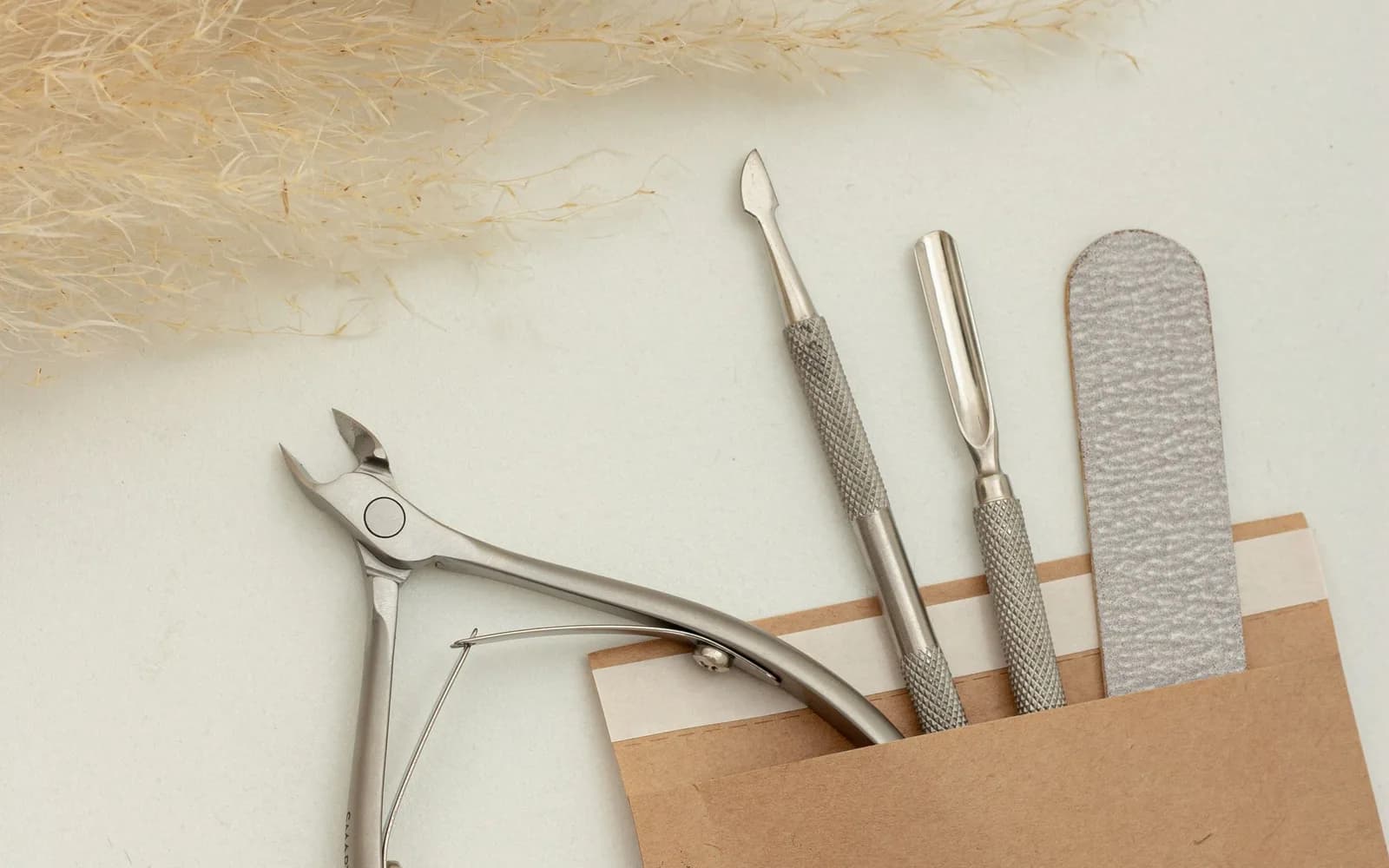
- Consumables (back bar): base, top and builder gel, acrylic powder and liquid, primer, acetone, cleanser, files, buffers, tips, forms, cotton, wipes, gloves, towels. Running out stops services, so these get the closest tracking.
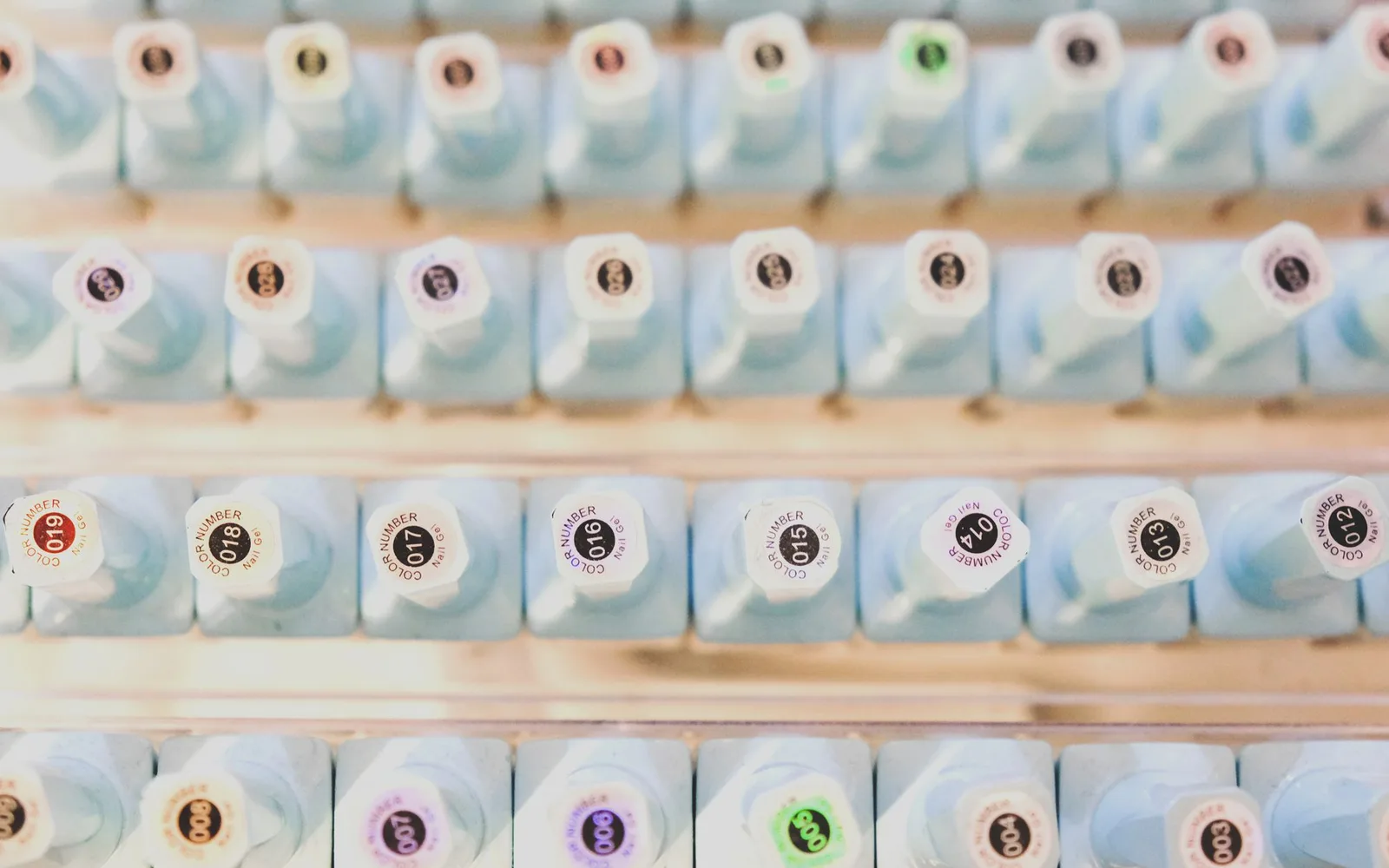
- Colours: gel polish and regular polish shades. Expensive to hold in depth and easy to overbuy.
- Retail: cuticle oil, hand cream and anything else you sell. Tracked separately because it is sold, not used.
- Hygiene supplies: disinfectant, single-use items and sterilization supplies. Treat them like consumables: never let them run out.
For each item, write down the supplier, the unit you buy (bottle, box, pack) and the unit price. That one sheet already answers "where do we order this from and what does it cost?"
Set a reorder point for every consumable
A reorder point is the stock level at which you order again, so new stock arrives before the old runs out:
Example: the salon uses about 2 bottles of base gel a week and the supplier delivers in a week. The reorder point is 2 × (1 + 1) = 4 bottles. When the shelf drops to 4, order enough to get back to your full level, for example 6.
Weekly usage does not need to be exact. Start with an estimate, then correct it after a month of counts. Raise the safety stock before busy seasons, such as the weeks before the holidays or wedding season.
A 15-minute weekly count
- 1Pick one quiet time each week, the same day and the same person.
- 2Count only consumables and hygiene supplies weekly; colours and retail once a month.
- 3Count unopened units and note how many are open. Open bottles count as one, even if half used.
- 4Write the count next to the reorder point and order everything at or below it.
- 5Put new stock behind old stock, so the oldest is used first.
Write the date on each bottle when you open it. It shows how fast you really use a product and stops old, opened bottles from hiding at the back.
Find your real product cost per service
Product cost per service is the number that links stock to prices. You can measure it without weighing anything:
- 1When you open a bottle or box of a key product, note the date.
- 2When it is empty, count how many services used it in that time. Your appointment history shows how many of each service you did.
- 3Cost per service = unit price ÷ number of services.
- 4Add up the products a service uses to get its total product cost.
Put that figure into the nail service price calculator with your time and overhead to check your prices. The guide on how to price nail services explains the rest of the method.
Colours without overbuying
- Keep core shades in depth: nudes, a classic red, white and black run out first. Hold one spare of each.
- Buy seasonal shades in singles and reorder only what clients actually book.
- Retire slow shades: if a colour has not been used in three months, stop reordering it and use it up in offers or nail art.
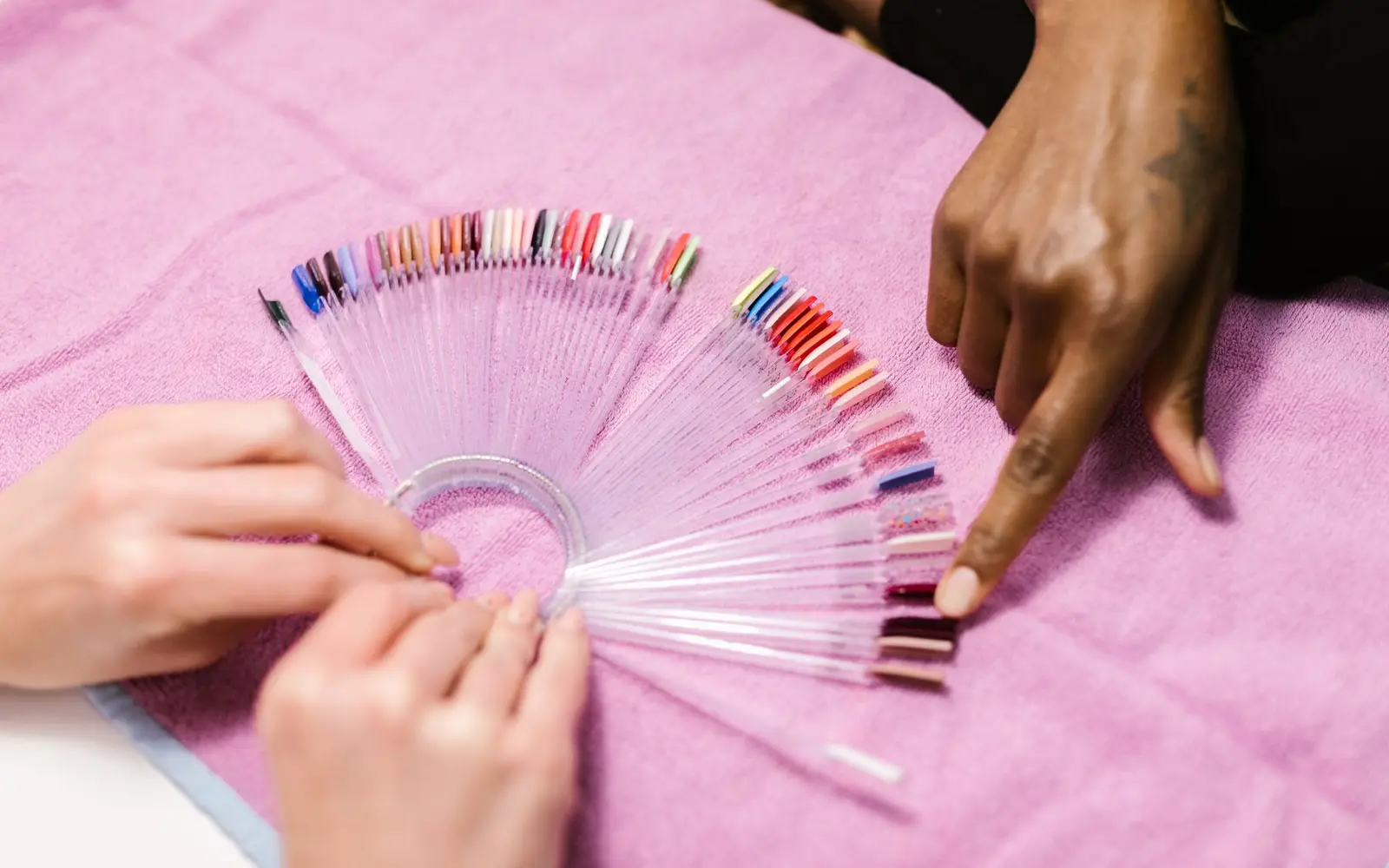
- Show colours clearly: a well organized chart reduces requests for shades you do not stock. See how to build a digital nail polish colour chart.
Storage and shelf life
Store gel and polish closed, upright and away from sunlight, UV lamps and heat; gel products cure under UV light, and heat thickens polish. Check the manufacturer's storage advice and the period-after-opening symbol (an open jar with a number of months, such as 12M) where the product has one.
Never decant products into unlabeled containers. Keep the original label or label the new container with the product name and opening date, which also helps if a client asks what was used. The nail salon hygiene checklist covers single-use items and cleaning.
What to put in your spreadsheet
One row per item and these columns are enough: item, group, supplier, unit, unit price, reorder point, full level, on hand, last count date, last order date.
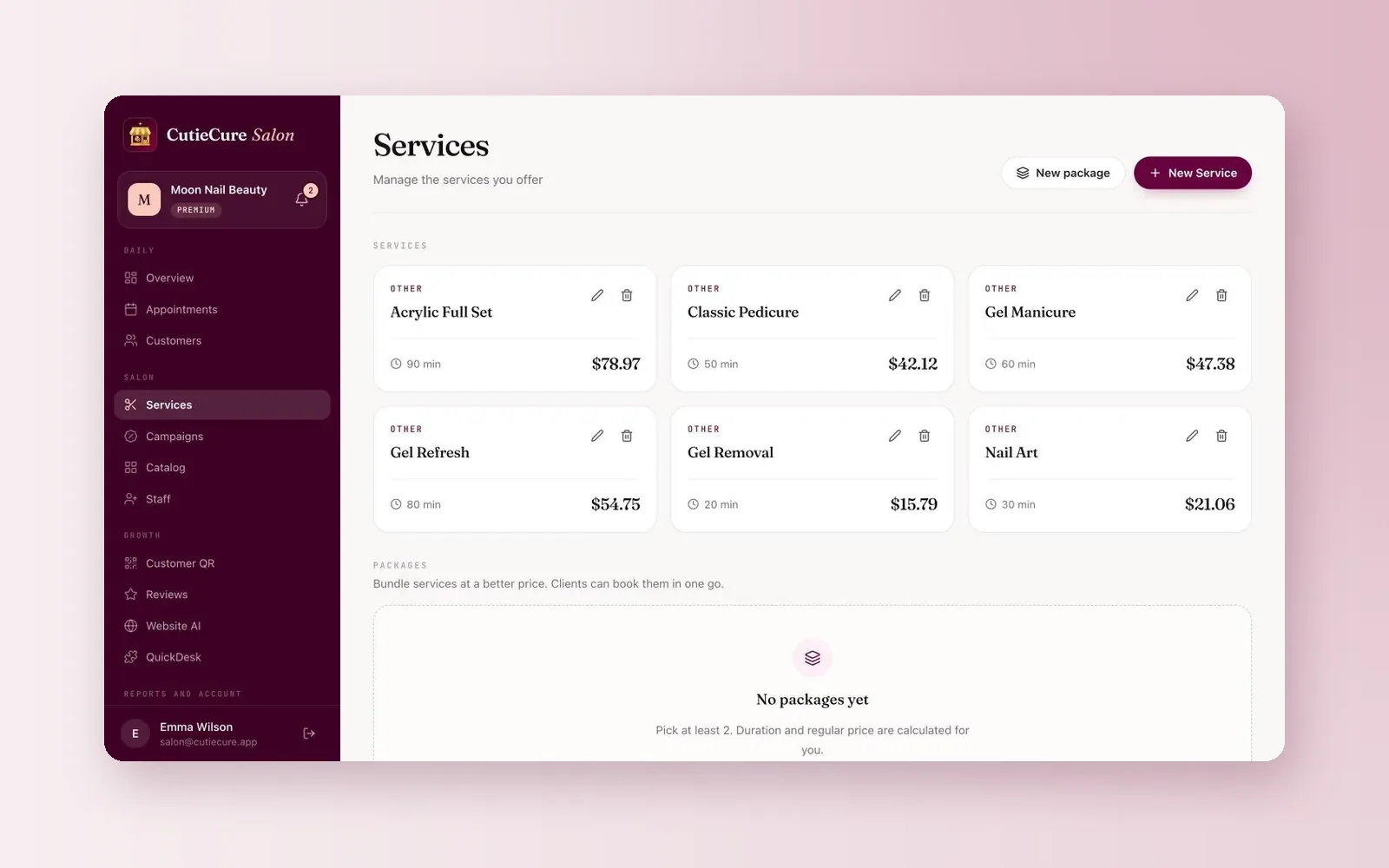
CutieCure Salon does not track stock. Your service list and appointment history show how many of each service you performed in a period, which is the usage figure the spreadsheet needs, and your service durations feed the price calculator.
Free tools and next steps
- Nail service price calculatorTurn product cost, time, hourly pay, overhead and margin into a suggested price per service, then print your price list.
- Appointment and scheduling software for nail salonsOnline booking, per-technician scheduling, client notes and no-show tracking for nail salons. No booking commission, 14-day free trial, no card.
Frequently asked questions
How do I keep track of nail salon inventory?
Group stock into consumables, colours, retail and hygiene supplies, set a reorder point for each consumable, count consumables weekly and everything monthly, and order whatever is at or below its reorder point.
How do I calculate a reorder point?
Weekly usage × (delivery time in weeks + one safety week). If you use 2 bottles a week and delivery takes a week, reorder at 4 bottles.
How do I work out product cost per nail service?
Note when you open a product, count the services that used it until it is empty, then divide the unit price by that number. Add up the products a service uses to get its product cost.
How many polish colours should a nail salon stock?
Enough core shades in depth and a rotating set of seasonal shades bought singly. Retire any shade that has not been used for about three months instead of reordering it.
Do I need inventory software?
Not for a small salon. A shared spreadsheet with reorder points and a weekly count is enough. Software helps when you have several locations or sell a lot of retail.
Written by the team that builds CutieCure Salon, booking software for nail salons. When the product or a fact in this guide changes, we update the guide and the date above.
Put this into practice with CutieCure Salon
Online booking link, website widget, packages, customer groups, campaign codes and team performance in one dashboard, plus AI try-on for your clients.