How to Start a Nail Business From Home: Rules, Setup, Pricing and Privacy
How to start a nail business from home: the rules to check, a home nail salon setup, privacy, pricing, looking professional and when to move out.
By the CutieCure Salon teamPublished 10 min read
In short
- Check the rules before your first client: licensing, home business and building rules, insurance and tax registration differ by country and city, so ask your local authority and an accountant.
- A home nail salon setup needs a separate area with surfaces you can disinfect, ventilation and dust extraction, good light, hand washing, storage and toilet access, laid out so clients never walk through your private life.
- Home is not automatically cheaper: price from your time and costs, share your address only after a confirmed booking, and run it like a studio with a booking link, written policies and receipts.
- 1. Is it allowed? Check the rules before your first client
- 2. Choose the space: a separate room or a dedicated corner
- 3. Ventilation, dust extraction and lighting
- 4. Water, toilet, entrance and storage
- 5. Privacy and safety: your address, your hours, your rules
- 6. Pricing at home: not automatically cheaper
- 7. Look professional from day one
- 8. When to move to a studio or rent a chair
- 9. Running a home studio with CutieCure Salon
Is it allowed? Check the rules before your first client
Working from home does not mean working outside the rules. Whether you can do nails at home, and on what terms, depends on your country, your city and sometimes your building. Nobody can give you one answer for everywhere, so make a short list of questions and get the answers in writing.
- Licence or qualification: whether nail services need a licence, certificate or registered training where you live, and whether a home workplace needs its own approval or inspection.
- Home business and zoning rules: whether your area allows clients to visit a business in a home, and any limits on signs, parking, hours or the number of visitors.
- Your lease or building rules: a rental contract, building rules or an owners' association may ban or restrict business use. Ask before you buy furniture.
- Insurance: home insurance may not cover a business or clients on the premises. Ask about public liability and treatment insurance for nail services.
- Tax registration: how to register as self-employed or as a small business, which records you must keep, and whether you must issue receipts or invoices.
If you have not yet chosen between home, a rented chair and a small studio, the guide to starting a nail business compares the three.
Choose the space: a separate room or a dedicated corner
A separate room is the best option: a door you can close, a setup that stays in place, and clients who see a studio rather than your home. If you only have a corner, make it a real workstation that is not also the dining table or a child's desk.
- Surfaces you can disinfect: a table with a smooth, non-porous top, a washable chair for the client and a floor you can mop. Keep fabric, carpet and untreated wood away from the work area.
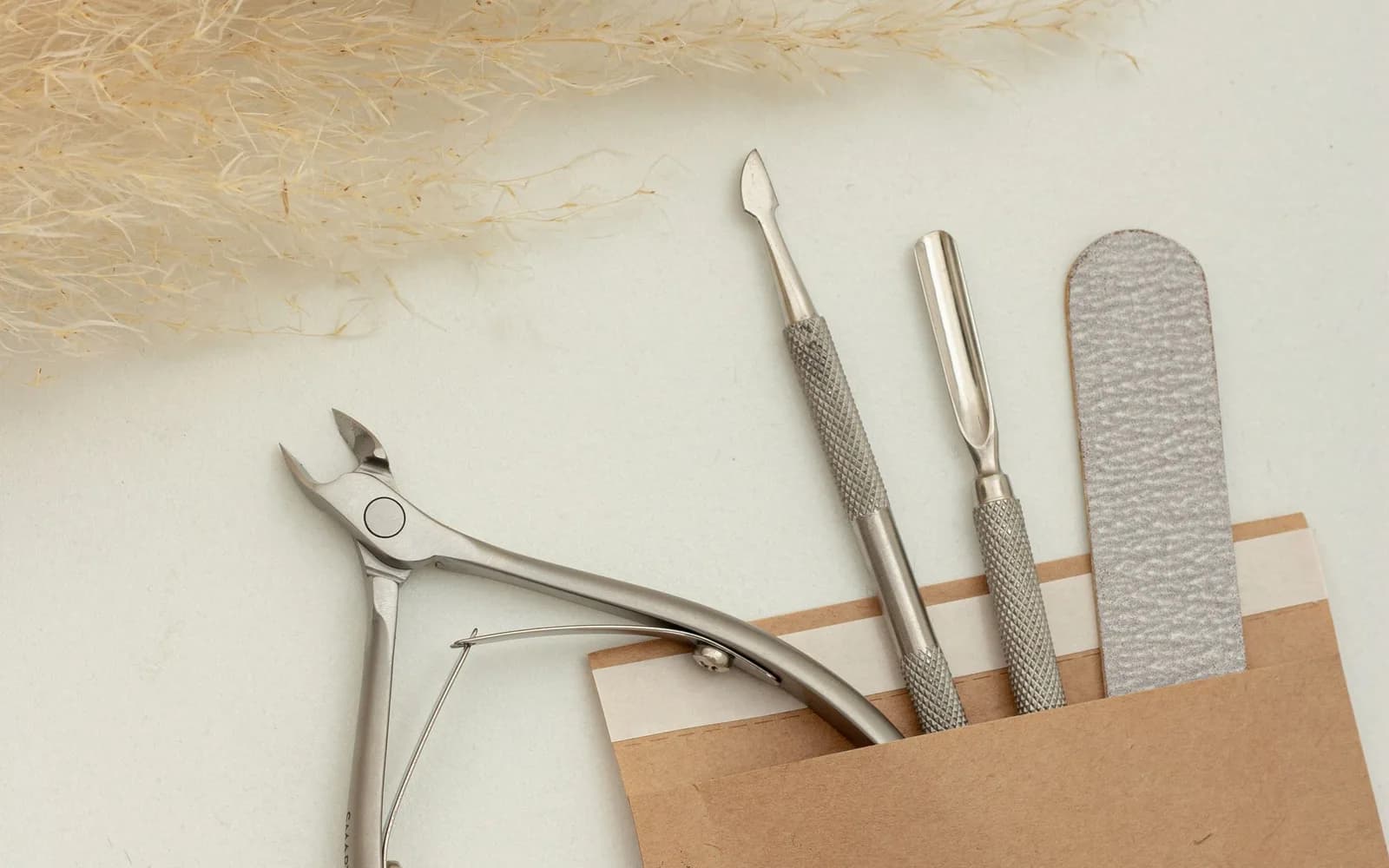
- A hygienic table: a fresh towel or disposable mat for each client, tools taken out of a closed pouch or container, a lidded bin, and nothing personal on the table.
- Distance from home life: no laundry, food or family passing through during appointments. Keep pets out of the room completely, for hygiene and for clients with allergies.
Run the same cleaning routine you would in a salon. The hygiene checklist lists what to clean between clients, at the end of the day and every week.
Ventilation, dust extraction and lighting
At home you breathe the air of your work area long after the client has left, and so does everyone you live with. Treat ventilation as part of the setup, not an extra.
- Fresh air: a window you can open, and ideally a way to move air out of the room rather than just around it.
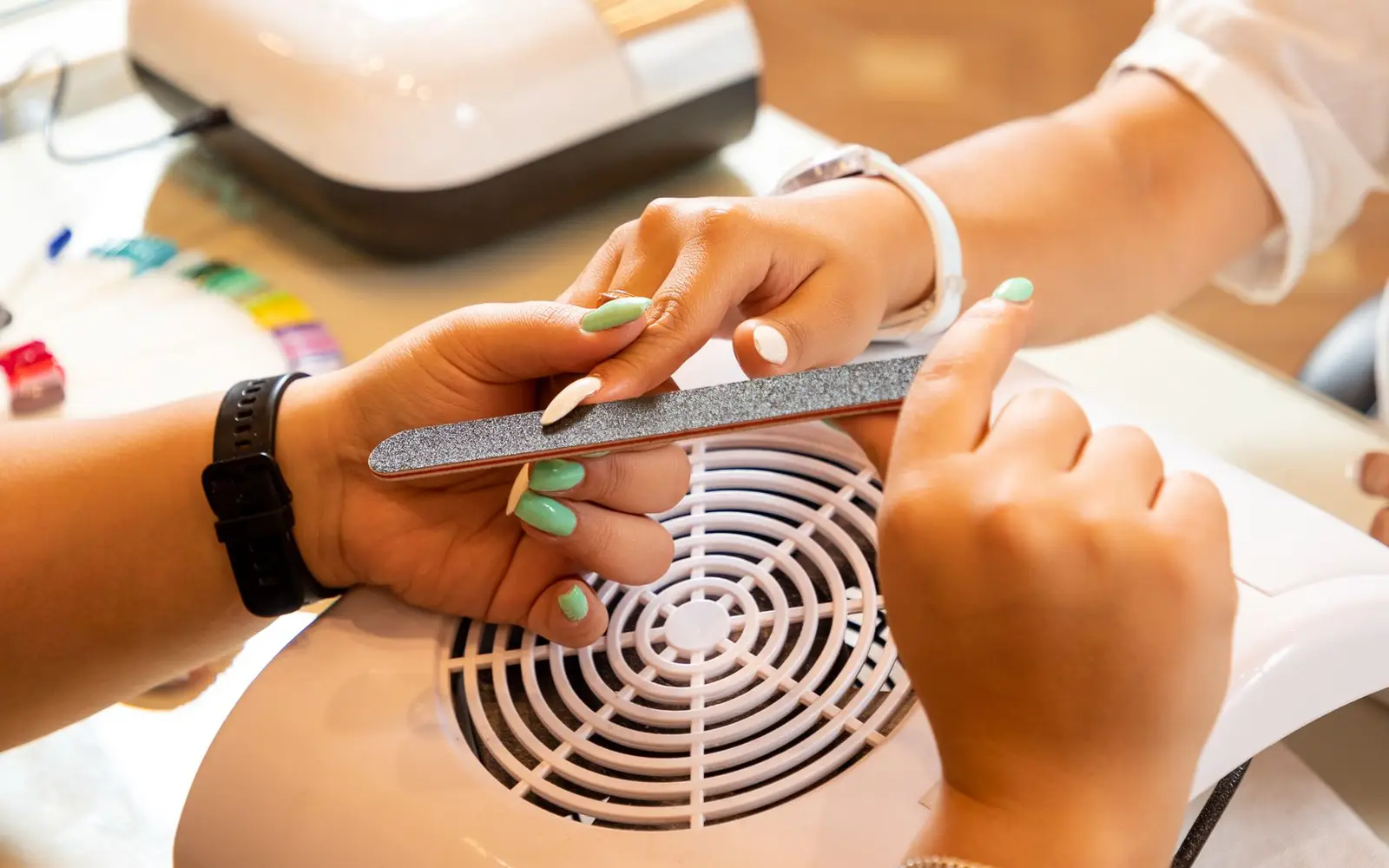
- Dust extraction: filing creates fine dust. A table extractor or dust collector next to the client's hand helps, and a mask is worth considering for long filing work.
- Product vapours: keep containers closed between steps, use small amounts and follow the safety information of each product. Store liquids away from heat and away from the kitchen.
- Lighting: a daylight-style lamp over the hands for detail work, plus soft general light in the room. Good light also gives you better photos of your work.
Water, toilet, entrance and storage
These four turn a nice corner into a place clients can actually visit.
A hand-washing plan
You and the client wash hands before the service. A sink in or near the room is easiest. If the only sink is in the kitchen, decide where clients wash their hands and keep soap and paper towels there just for them. Check whether local rules ask for a dedicated sink in a home workplace.
A client entrance and toilet access
Walk the route from your front door to the work area as if you were a client. The shorter it is, and the less private space it passes, the better. Decide which toilet clients may use, keep it guest-ready during working hours, and tell clients in advance if there is none they can use.
Storage
Closed shelves or drawers for products, a closed container for clean tools, a separate one for used tools, and a place for clean and used towels. Keep products out of reach of children and away from food.
Privacy and safety: your address, your hours, your rules
When you work from home, your address is your workplace. Decide early what is public and what a client gets only after you confirm her booking.
- Public: your business name, city or area, services, prices and photos of your work.
- After confirmation: the exact address, floor, door code, parking and how to find the entrance.
- Clear hours: pick your working days and hours and keep to them. If you answer messages at 11 p.m., clients learn that home means always open.
- First visits: take her full name and phone number when she books, and let someone you trust know your appointment times if that makes you feel safer.
- No-shows: at home a no-show costs you the same time as in a salon. Ask clients to confirm, send reminders, and stop taking online bookings from people who repeatedly do not come.
- Photos: skip location tags on posts shot at home, and check that no door number, street sign or view from the window shows in the background.
Write your cancellation and late rules down from the start. The cancellation policy guide has wording you can adapt.
Pricing at home: not automatically cheaper
It is tempting to set low prices because there is no rent. But your time costs the same at home, and so do products, disposables, electricity, laundry, insurance and the training you paid for. Part of your home also becomes a workspace you cannot use for anything else.
Price from your costs: the product cost of each service, plus your hourly rate for the minutes the service really takes, plus a share of your fixed costs. The nail pricing guide walks through the formula, and the break-even calculator shows how many appointments a month you need before you pay yourself anything.
Being cheaper than the salons nearby is one possible choice, not a rule. Clients who book you for your work, your calm room and your availability will pay a fair price; clients who come only for the lowest price leave for the next lowest one.
Look professional from day one
A home studio is judged on the same things as a salon, plus one question clients rarely say out loud: is this a real business? Answer it before they ask.
- A booking link: clients pick a service and a free time themselves instead of messaging you at all hours. The online booking guide covers what to look for.
- Written policies: booking, cancellation notice, lateness, no-shows, guests and children, and pets in the home. The free salon policy generator turns your choices into text you can share.
- A consultation form: allergies, the condition of nails and skin, and what she wants, filled in at the first visit. Print one with the free consultation form template.
- Receipts: give a receipt or invoice for every paid service, in the form your tax registration requires. It protects you as much as the client.
- A business phone number: a separate number keeps clients out of your private chats and lets you switch off after hours.
When to move to a studio or rent a chair
Home is a good start, but not always the right place for good. Signs it may be time to move:
- Your calendar is full at the hours you set, and you are turning clients away.
- The rules, your building or the people you live with make it hard to keep working from home.
- You want to hire or host a second technician, which can change the rules and needs more space.
- You find it hard to stop working because the studio is always one door away.
Renting a chair or a room in a salon is the smaller step: a fixed rent or a share of your revenue, an address that is not your own, and people walking past. A studio of your own is the bigger step, with more control and higher fixed costs. Before either, run the break-even numbers with the new rent to see how many appointments a month the move needs.
Running a home studio with CutieCure Salon
CutieCure Salon is booking software for nail salons and solo technicians, and a few of its settings suit a home studio.
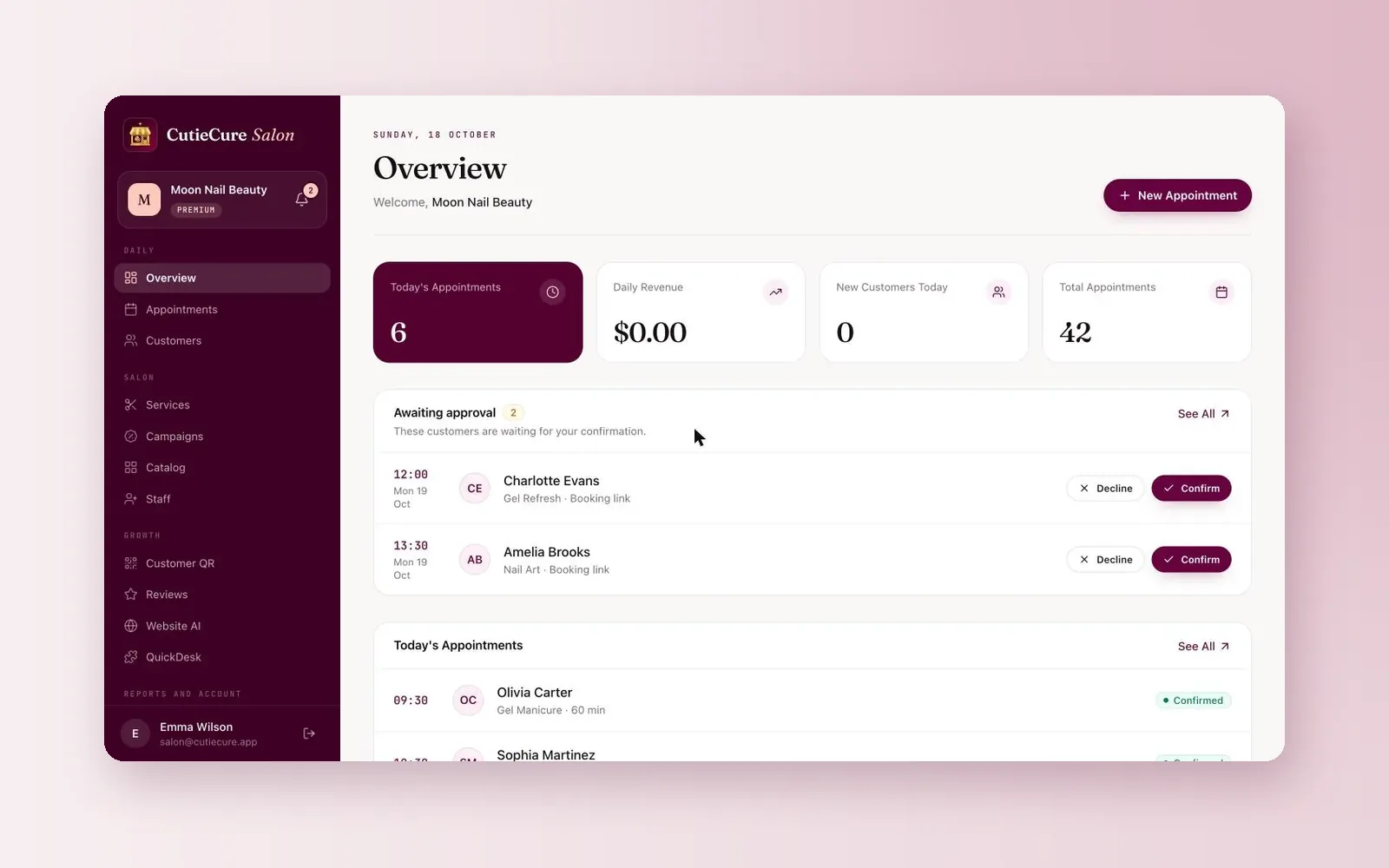
- Booking without messages: clients book on your booking link or website widget with their name and phone number, at any hour, without an account. Online bookings arrive as pending for you to confirm, and unconfirmed ones can be cancelled automatically after 2 to 72 hours, as you choose.
- Your address off the page: in Settings, the Address field is optional. Leave it empty and your booking page shows only your city; send the exact address yourself when you confirm. The screen a client sees after booking has a button to call the phone number you entered, so use a business number there.
- Your hours: opening hours are set per salon, and clients can only book inside them, so enter the hours you really want to work from home.
- Reminders and no-shows: WhatsApp reminders (up to three, from 48 hours to 1 hour before) let clients confirm or cancel with one tap. You can mark no-shows and block repeat no-shows from booking online.
- Client notes: keep allergies, preferences and visit history on each client record.
The Basic plan covers one person, which fits a solo home studio, and every account starts with a 14-day free trial without a card. CutieCure Salon does not take payments or deposits, issue receipts or invoices, register your business or check local rules, so keep those with your own payment method and your accountant.
Free tools and next steps
Frequently asked questions
Do I need a licence to do nails from home?
It depends on where you live. Some places require a licence, certificate or registration for nail services and have separate rules for working from home, so ask your local authority and an accountant before your first paying client.
What do I need for a home nail salon setup?
A separate room or a dedicated corner with surfaces you can disinfect, ventilation and dust extraction, good light, a place to wash hands, closed storage, a short route from the entrance and a toilet clients can use.
Should I charge less because I work from home?
Not automatically. Your time, products, disposables and insurance cost the same at home, so price from your costs and the time each service really takes.
How do I keep my home address private?
Show only your city or area in public and send the exact address after you confirm a booking. In CutieCure Salon the Address field is optional, so your booking page can show only your city.
When should I move out of my home studio?
When your calendar is full, the rules or your household make home work difficult, or you want to add a technician. Check with a break-even calculation that the new rent works before you move.
Written by the team that builds CutieCure Salon, booking software for nail salons. When the product or a fact in this guide changes, we update the guide and the date above.
Put this into practice with CutieCure Salon
Online booking link, website widget, packages, customer groups, campaign codes and team performance in one dashboard, plus AI try-on for your clients.