Nail Tech Supplies List: Nail Salon Equipment Checklist, Starter vs Can Wait
A nail tech supplies list by station, tools, consumables, hygiene, pedicure and nail art, with what to buy for opening day and what can wait.
By the CutieCure Salon teamPublished 10 min read
In short
- Build the list from your service menu, not from a shop's starter kit: every item should belong to a service you will sell in your first months.
- Buy enough reusable tool sets to clean and disinfect or sterilize between clients without waiting, and treat single-use items and hygiene supplies as stock that never runs out.
- Split everything into starter and can wait. A second lamp, advanced nail art, a full colour wall and retail can follow once your bookings show what clients actually want.
- 1. Start from your service menu, not a starter kit
- 2. Furniture and the work station
- 3. Electric file and UV/LED lamp: what to look for
- 4. Hand tools, and how many sets you need
- 5. Consumables: what stops a service when it runs out
- 6. Hygiene, sterilization and disposal
- 7. Pedicure station basics
- 8. Nail art kit, client comfort and the front desk
- 9. Starter vs can wait, and how not to overbuy
- 10. Where CutieCure Salon fits
Start from your service menu, not a starter kit
A supplies list goes wrong when it starts in a shop. Kits bundle things you may never use, and the opening budget goes on shades and gadgets before you have a single regular client. Start from the services you will sell in your first three months, and ask for each one: what does it need on the table, in my hand and in the bin?
- Write your opening menu first. A short menu (for example gel polish, builder gel, one extension system, a basic pedicure and simple nail art) keeps the list short too. The service menu guide helps you choose.
- Pick one product system. Base, colour and top from one gel family, cured in a lamp the manufacturer lists as compatible, means fewer curing and lifting problems and fewer bottles.
- Put every purchase into your startup costs. Equipment and first stock belong in the business plan and startup cost checklist, and the total changes how many services you need before you earn it back in the break-even calculator.
If you are still choosing between a home studio, a rented chair or your own premises, read how to start a nail business first: the model changes the list.
Furniture and the work station
- Manicure table: stable, at a comfortable height, wide enough for lamp, towel and tools, with a non-porous top that is easy to wipe and drawers underneath.
- Technician chair: adjustable height and real back support. You will sit in it for hours, so this is not the place to save.
- Client chair: stable, comfortable for a long extension appointment and easy to clean. Avoid fabrics that hold dust.
- Task lamp: a bright, daylight-type light over the hands. Colour matching and cuticle work both depend on it.
- Dust extractor: a table-mounted or built-in collector near your filing hand, plus good general ventilation in the room. Before you buy, check the filter type and how easy filters are to replace.
- Storage: closed cupboards or drawers for products, away from sunlight and heat, and separate, labelled space for clean and used tools.
- Trolley: a small trolley on wheels keeps what you need within reach and doubles as a pedicure station.
Electric file and UV/LED lamp: what to look for
The two most expensive tools on the table, and the easiest to buy wrong. How they fit your services and your hand matters more than the brand.
Electric file
- Weight and grip: hold the handpiece if you can. A light, balanced handpiece is easier on your wrist over a full day.
- Speed, vibration and reverse: smooth, steady speed with little vibration or heat at the speeds you will actually use matters more than a high maximum. Reverse helps for left-handed work.
- Standard bit size, warranty and repairs: standard shanks let you buy bits anywhere, and a local repair or replacement option keeps you working.
- Bits: start with the few you will use daily (a prep bit that is safe near the cuticle, one for shortening and removal, a fine finishing bit), with enough copies to rotate while others are being cleaned.
UV/LED lamp
- Compatibility: use a lamp your gel manufacturer lists as suitable and follow its curing times. A lamp that does not match the gel can leave product under-cured.
- Size: wide enough for a whole hand, including the thumb, and for a foot if you do pedicures. A removable base helps.
- Timer and light spread: preset times that match your gel instructions, and even light with no dark corners.
Hand tools, and how many sets you need
- Cuticle pushers (metal, or single-use wooden sticks), cuticle nippers and nail clippers.
- Files and buffers in the grits you use for natural nails and for enhancements. Porous ones are single use, or given to the client.
- Brushes for your system: gel or acrylic application, a liner and a fine detail brush, plus a dust brush.
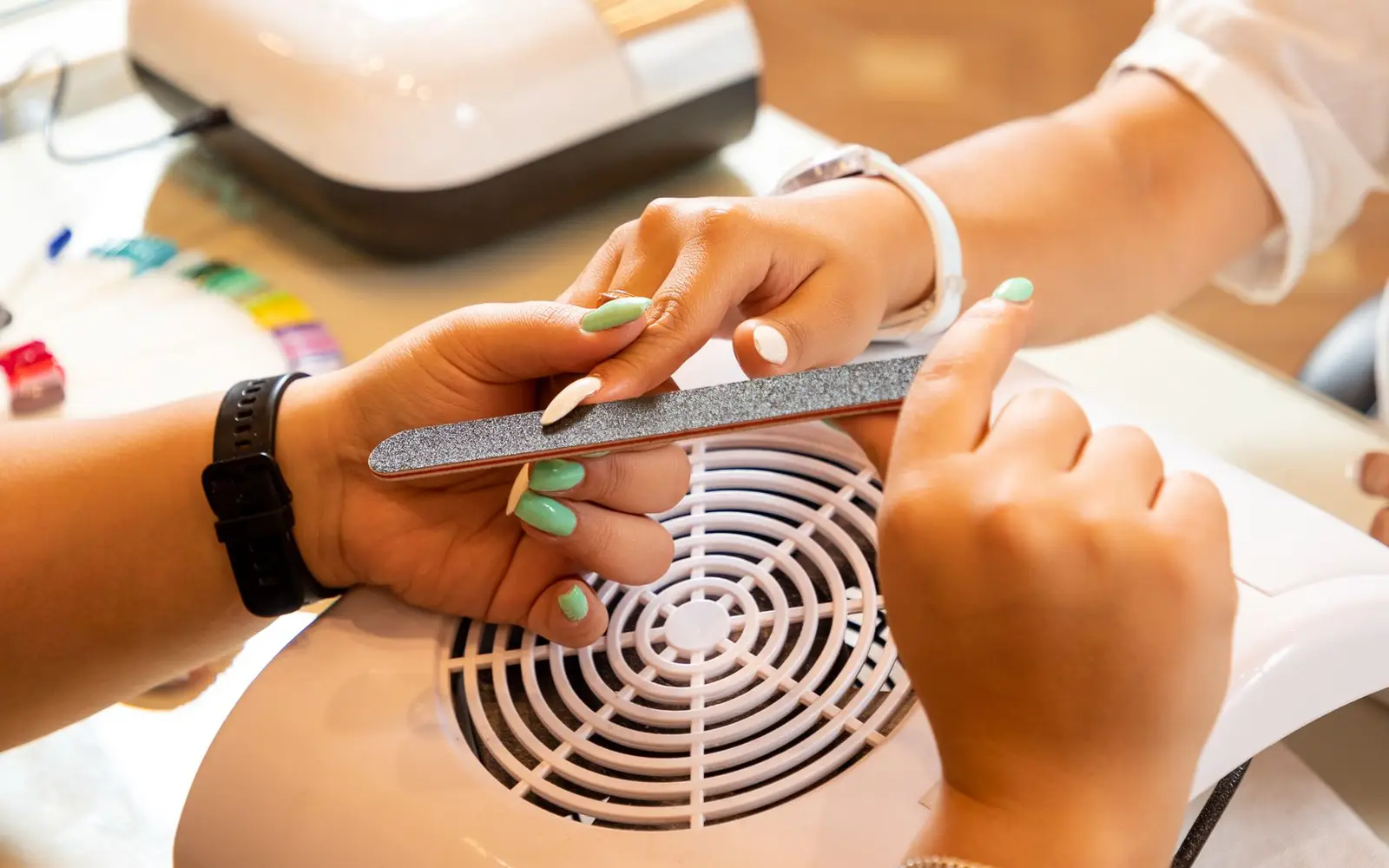
The question that matters is not which tools, but how many sets. A reusable set leaves the table after every client for cleaning and disinfection or sterilization, and it cannot come back until the whole cycle is finished, dried and stored. Count like this:
- 1Time the full cycle for one set: scrubbing, disinfection or sterilization, drying, cooling and packing.
- 2Count how many clients you see in that time on your busiest day.
- 3Buy that many sets plus one spare, for each technician.
For example, if the full cycle takes about 90 minutes and you start a new client every hour, two sets are in use in that time, so you need three with the spare. The hygiene checklist covers the cleaning steps themselves.
Consumables: what stops a service when it runs out
- Gel system: base, top and builder gel, plus the prep products your system uses (cleanser, dehydrator, primer).
- Extensions: tips or forms and the matching glue or product, if extensions are on your menu.
- Colours: a short core range in gel polish and regular polish instead of a full wall. Nudes, a classic red, white and black come first.
- Removal: acetone and a non-acetone remover, foil wraps or clips, lint-free wipes.
- Protection and comfort: disposable gloves in the sizes your team wears, hand towels or disposable towels, table covers, cotton pads, cuticle oil.
Buy consumables for your first few weeks, not your first year. You will learn your real usage quickly, and the inventory guide shows how to turn it into reorder points with a short weekly count. Once you know what a service uses, put that product cost into the price calculator.
Hygiene, sterilization and disposal
- Tool reprocessing: depending on your local rules, an approved disinfectant and a lidded container, or a sterilizer such as an autoclave with sterilization pouches and indicators. Buy the method the rules ask for; a bigger device can wait.
- Cleaning gear: a scrub brush, a sink or basin for washing tools before disinfection, and closed boxes marked clean and used.
- Single-use items: files, buffers, orange sticks, toe separators, pedicure liners and gloves. Keep more than you think you need, because running out is how corners get cut.
- Disposal: lidded bins, bags for dust and product waste and, if your local rules allow blades at all, a proper sharps container and a way to dispose of it.
- Basics: hand soap, paper towels and a first aid kit.
Hygiene items are always starter. None of them can wait.
Pedicure station basics
- Seating: a pedicure chair, or a comfortable client chair with a separate footrest. A plumbed pedicure throne is a later purchase, not an opening one.
- Basin: a portable or pipeless basin you can fully clean and disinfect between clients, with disposable liners if it takes them.
- Technician stool: low, on wheels, with back support.
- Foot tools: a toenail nipper and clipper in your tool rotation, a foot file with replaceable pads, a pusher.
- Comfort and single use: towels, toe separators, disposable slippers, foot cream.
Starter: only if pedicure is on your opening menu. If it is not, the whole station can wait until clients ask for it.
Nail art kit, client comfort and the front desk
Nail art starter kit
Start with the techniques you can sell today and add to the kit as add-ons sell. The guide on selling nail art add-ons shows how to price and show them.
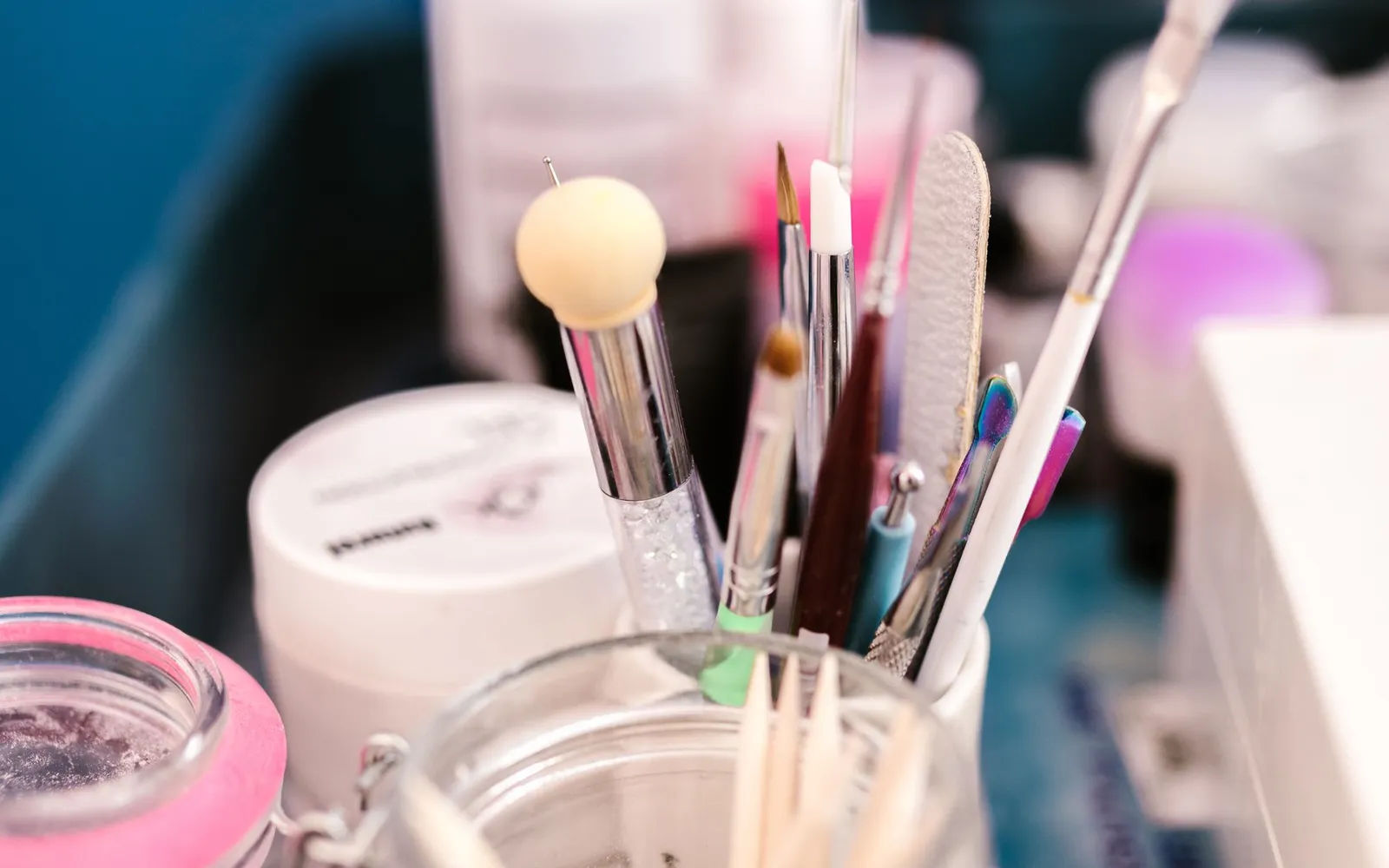
- A liner brush, a detail brush and a set of dotting tools.
- Black and white gel paint, a top coat suited to art, and a few shades for simple designs.
- One or two chrome or glitter powders, a small mixed set of rhinestones, some foils or stickers, and tips for making samples.
Client comfort and front desk
- An armrest cushion, a clean towel for each client and a place for coats, bags and phones.
- Water, a mirror and a phone charger within the client's reach.
- A visible price list, a way to take payment and a simple system for bookings and client notes.
Starter vs can wait, and how not to overbuy
Starter: opening day
- Work station, both chairs, task lamp, dust extraction and closed storage.
- One electric file with a few bits, and one compatible UV/LED lamp.
- Enough hand tool sets to rotate between clients, plus a spare.
- Consumables for your opening services, in small quantities.
- Everything for hygiene, single use and disposal.
- A basic nail art kit and the front desk basics.
Can wait
- A second station, a second lamp (until two services overlap), a spare handpiece and bits for systems you do not offer yet.
- Bulk sizes, trend colours and second product brands.
- A plumbed pedicure throne, or the whole pedicure station if pedicure is not on your menu.
- Stamping plates, 3D gels, airbrush kits and a large rhinestone collection.
- Retail stock, display shelving, a waiting area and decoration.
Tips to avoid overbuying
- Wait for a month of bookings before buying a second of anything.
- Buy small sizes of anything new, and size up only after you have used one up.
- Keep receipts and warranty papers in one place, and test equipment while you can still return it.
- Keep a wish list and review it once a month instead of buying on impulse.
Where CutieCure Salon fits
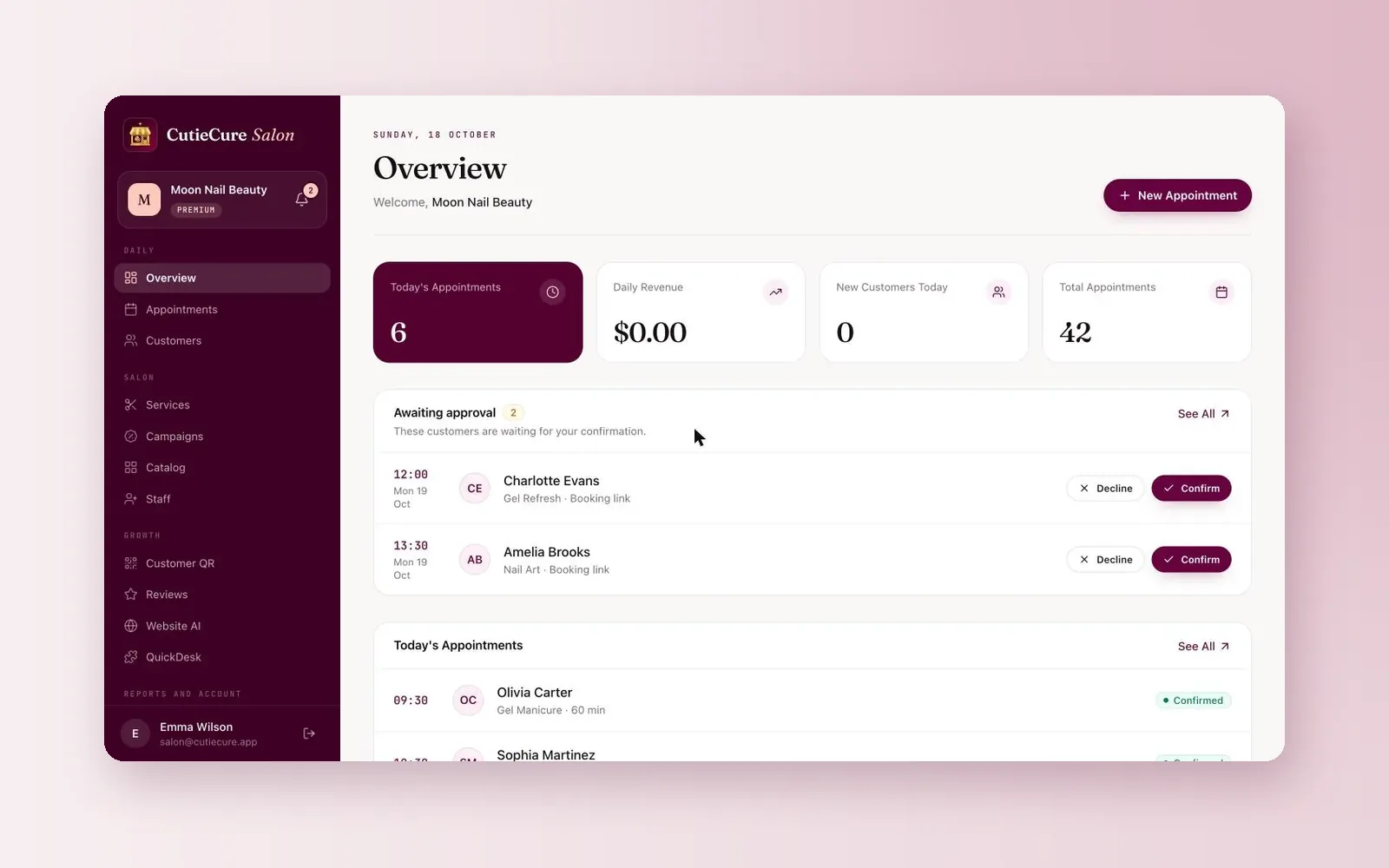
CutieCure Salon does not track stock or remind you to reorder, so your supplies list stays in your own spreadsheet. Two things still help:
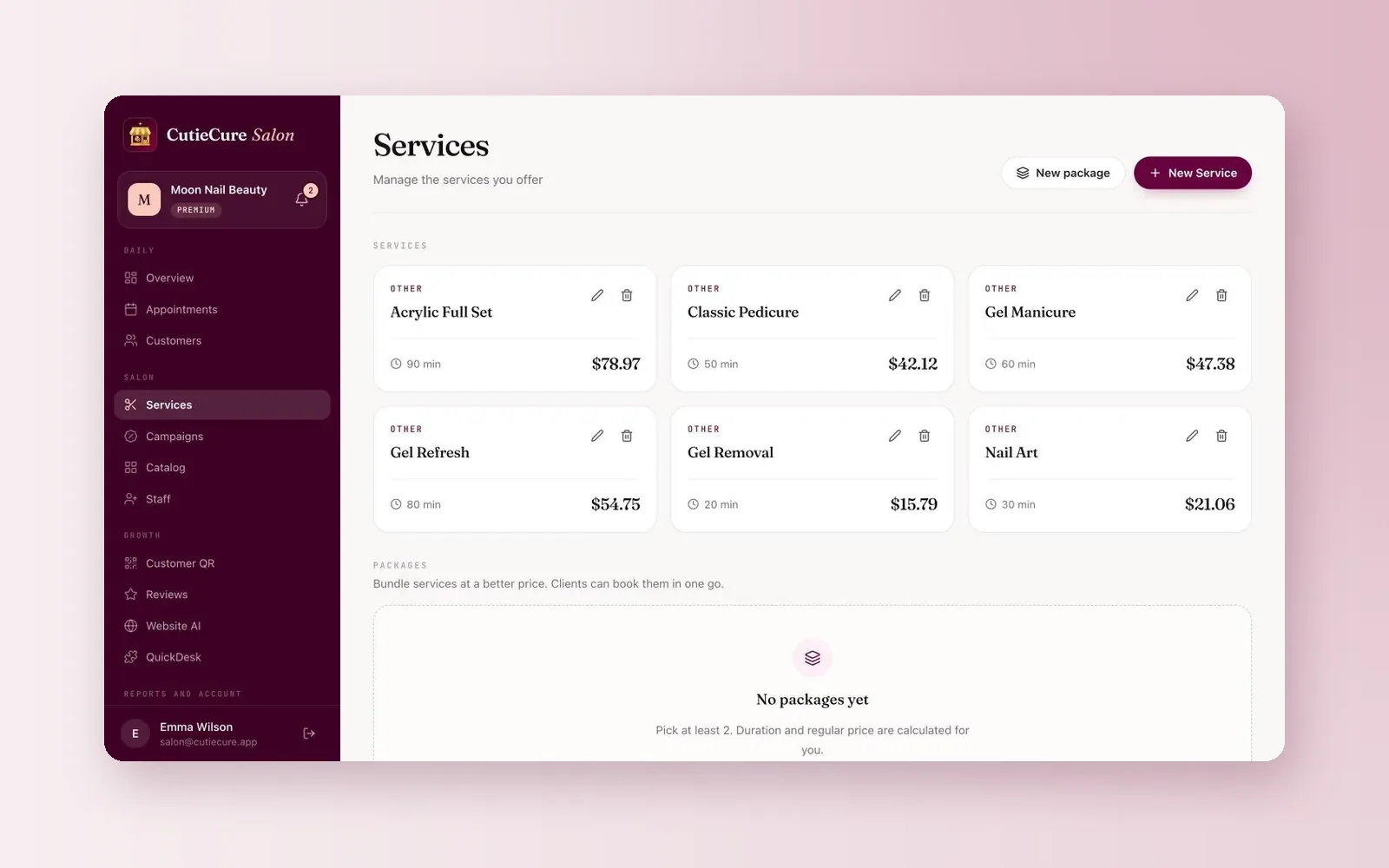
- Services carry a duration and a price. Your service list is the menu this supplies list starts from, and durations show how long each tool set is busy.
- Analytics for the last 7, 30 or 90 days shows Top Services, your five most booked services. That tells you which supplies to restock first, and which items on your can-wait list are worth buying.
Free tools and next steps
Frequently asked questions
What supplies does a nail tech need to start?
A work station with good light and dust extraction, an electric file and a compatible UV/LED lamp, enough reusable tool sets to rotate between clients, consumables for your opening services and everything your local rules require for hygiene and disposal.
How many sets of nail tools do I need?
Enough to cover the clients you see while one set is being cleaned and disinfected or sterilized, plus one spare, for each technician. Time your full cleaning cycle and count from there.
Do I need an autoclave for a nail salon?
It depends on your local rules and your services. Check what your health authority requires for metal implements before you buy, and follow the manufacturer's instructions for whichever method you use.
What nail salon equipment can wait until later?
A second lamp, bulk sizes, trend colours, advanced nail art, a plumbed pedicure chair, retail and decoration can usually wait until your bookings show what clients want.
Does CutieCure Salon track nail supplies?
No. It does not track stock or reorder for you. Services carry durations and prices, and the analytics show your top services, which tells you what to restock first.
Written by the team that builds CutieCure Salon, booking software for nail salons. When the product or a fact in this guide changes, we update the guide and the date above.
Put this into practice with CutieCure Salon
Online booking link, website widget, packages, customer groups, campaign codes and team performance in one dashboard, plus AI try-on for your clients.